
Is Aluminium Magnetic?
Is aluminium magnetic for an aluminium wall art print?
If you are asking “is aluminium magnetic” because you want to hang something on it, you are already thinking in the right direction. With our aluminium wall art print, the short answer is that aluminium is not magnetic under normal circumstances, so a typical fridge magnet will not stick with real magnetic attraction. That said, people still search “is aluminium magnetic” because magnets can behave in surprising ways near a metal surface, especially when a magnetic field is involved. If you also wonder about durability and surface behaviour, you can read more about does aluminium rust while you decide on the best wall set-up.
Our product is a 3 mm thick aluminium picture with a modern, clean look, and it is lightweight yet very sturdy. You can choose sizes from 20 x 20 cm up to 90 x 90 cm, with 50 x 50 cm as the most popular size. You can also choose the cut: square, portrait, or landscape, so the print fits your space and your design. At the end of checkout, you choose your mounting: a standard hanging system, stainless steel standoffs or no standoffs (also available in black), a side mounting system, or no hanging system at all.

Is aluminium magnetic enough for a magnet to stick to an aluminium wall art print?
No, for our aluminium wall art print you should assume a magnet will not stick, because aluminium is magnetic only in a very weak, temporary way. If you try a strong magnet on the surface, you typically will not get the kind of “snap” you would get with ferromagnetic materials like iron. That is the practical meaning of non-magnetic here: you cannot rely on magnets for mounting notes, photos, or accessories on the print. If you want functional wall storage with magnets, you would need a different material or an added magnetic layer, not just pure aluminium.
However, the aluminium plate is still ideal for wall drecor because it is rigid, sleek, and just 3 mm thick. The print stays straight and looks modern, without the bulk of thicker panels. Because it is lightweight, it is also easy to handle during installation, regardless of whether you choose a square, portrait, or landscape cut. For shoppers who want to understand the base material better, you can also read is aluminium a metal for extra context.
When can aluminium become magnetic: alloy, current, and a changing magnetic field
People also ask whether aluminium becomes magnetic because they have seen a magnet “react” near aluminium in experiments. Aluminium can appear to respond when there is a changing magnetic field, because aluminium is conductive and has good conductivity, so it can generate small electrical currents. Those small electrical currents can create a significant magnetic effect that pushes back on the magnet, which can make the magnet slow down or feel like it is being resisted. This is not classic magnetic attraction, but an induced effect related to current, not permanent magnetism.
A well-known demo is dropping a strong magnet down an aluminium pipe: the magnet falls slowly because the induced current creates a magnetic field that opposes the motion. You might also hear “magnet down an aluminium pipe” described as proof that aluminium is magnetic, but it is really about induced magnetic effects and magnetic behaviour in a conductive metal. In this situation, the magnet can even seem to repel the motion, which surprises people who expect only attraction. This is also why a strong magnetic field can create noticeable effects near aluminium, even though aluminium is not magnetic in the everyday sense.
Magnetic metal vs non-magnetic metals: and why aluminium is classified differently
If you are comparing materials, it helps to separate ferromagnetic materials from non-magnetic metals. Materials like iron and nickel are ferromagnetic materials, and cobalt is also in that group, meaning they can exhibit magnetism strongly and can become permanently magnetic because their magnetic domains align. That is why a magnet is clearly attracted to a magnet-friendly surface made from those materials. When someone says “magnetic metal”, they usually mean a ferromagnetic one, not just any metal.
Aluminium is classified differently because it does not have the same domain structure and does not hold magnetism. Instead, aluminium’s magnetic properties are mainly paramagnetism, which is weak and only present while an external magnetic field is applied. At the electron level, the effect is tied to unpaired electrons and is due to electrons spinning, but the overall response remains weak. By contrast, in diamagnetic materials, electrons spinning in opposite directions can lead to a tiny opposing effect, while ferromagnetism involves many spins that effectively spin in the same direction across domains.
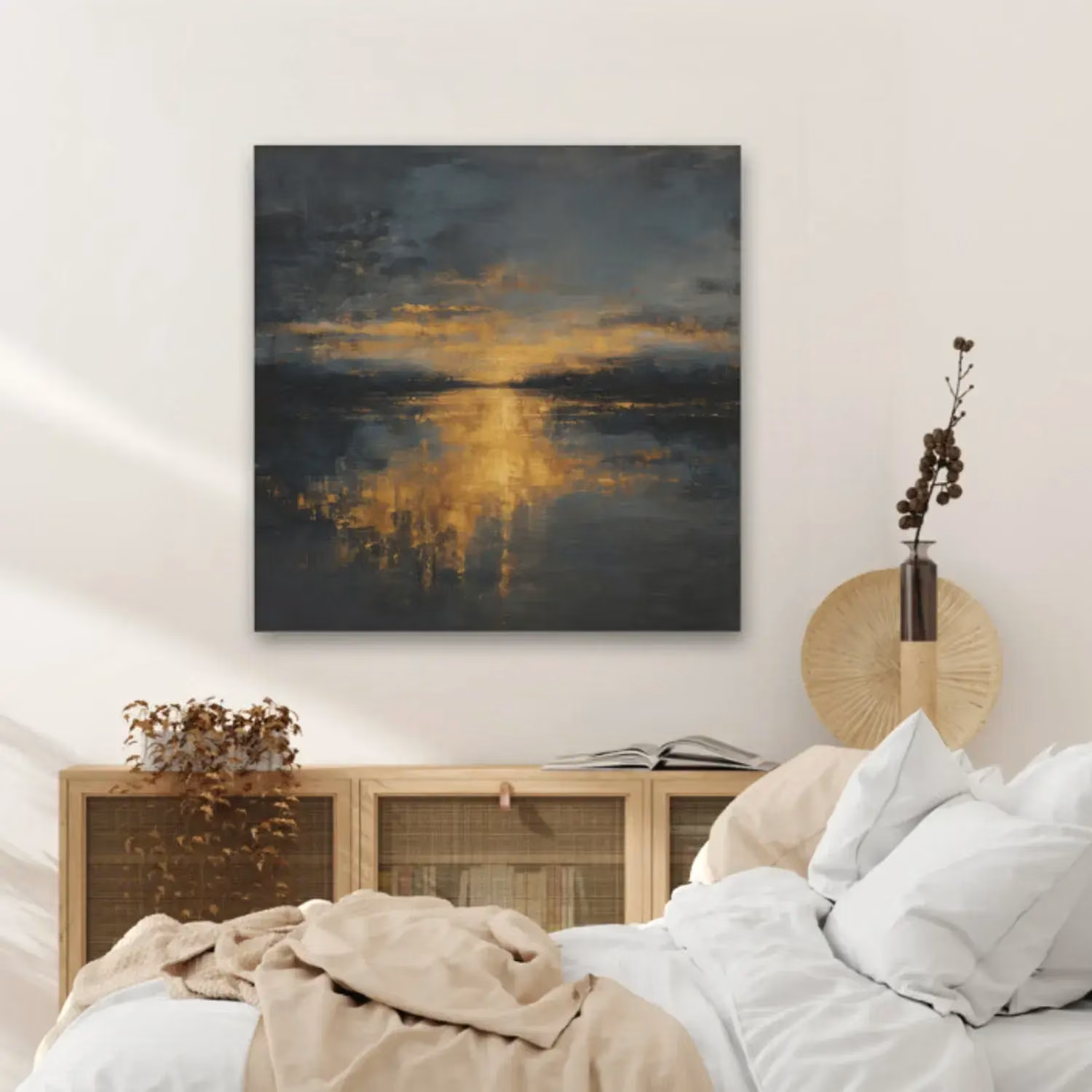
What this means for your aluminium prints
Because a magnet is not the right tool for mounting, our aluminium prints are designed to be easy to hang with proper hardware. You can pick from 20 x 20 cm to 90 x 90 cm, and 50 x 50 cm is the most popular because it fits many rooms without overpowering the wall. With more than 2,300 designs, you can choose a style that matches your interior while keeping the same sleek aluminium finish.
At the end of the ordering process, you choose the mounting that fits your wall and the look you want. Options include a standard hanging system, stainless steel standoffs or no standoffs (also available in black), a side mounting system, or no hanging system at all. Standoffs are popular if you want the print to “float” off the wall with a modern shadow gap, while a standard system keeps things minimal. If you are browsing inspiration specifically for this type of decor, you can explore aluminium wall art to see how different designs work on the wall.
Order your aluminium wall art now at Onlywow.uk
Pick your favourite design from our 2,300+ options, select your size (from 20 x 20 cm to 90 x 90 cm), and choose square, portrait, or landscape to match your space. Then finish your order by selecting the hanging option that fits your wall: standard, stainless steel standoffs or no standoffs in stainless steel or black, side mounting, or no system. Order your aluminium picture today and get a modern and sleek wall decoration that is lightweight, strong, and ready to hang.
Aluminium is generally non-magnetic in everyday use, but it can be magnetic or non-magnetic depending on its composition when an alloy includes ferromagnetic elements. In our aluminium wall art print, the surface will not be attracted to magnets in a practical way.
No, a magnet will not reliably hold on the aluminium surface because the magnetic response is too weak. Use the available hanging systems instead for safe, stable mounting.
In a strong magnetic field, aluminium can interact with magnetic fields by forming small electrical currents in the metal. That can create resistance or a pushback effect, but it is not the same as being attracted to magnets.
No, thickness does not turn aluminium into a magnetic material under normal circumstances. The 3 mm thickness mainly affects stiffness, weight, and the clean, modern look of the print.